















From Bare Ground to Green: How Hydroseeding Speeds Up Land Restoration
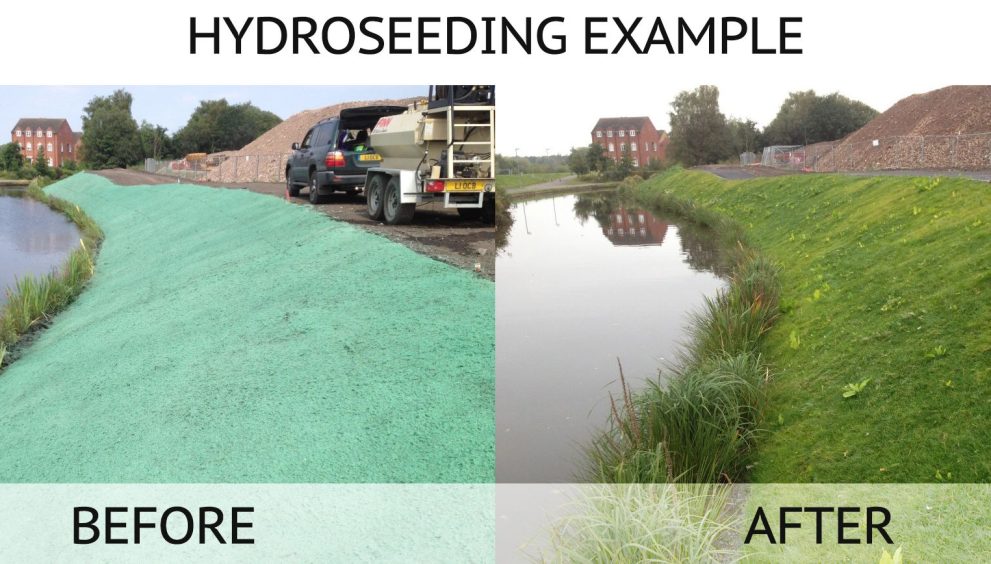
Achieving revegetation success on a small area of earth is one thing. Attempting to revegetate several hectares of disturbed land, or an embankment, or an airport expansion site is quite another.
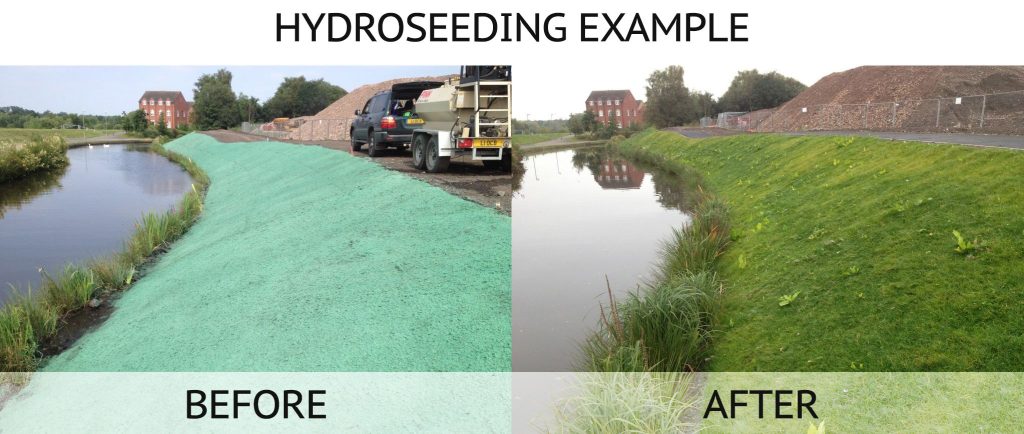
This is where hydroseeding can come in handy. Rather than hand scattering seed on the ground, a slurry of seed, water, mulch and other ingredients is sprayed on a prepared site. It has the ability to process larger and more uneven sites efficiently and forms part of a package of Vereco revegetation, landscaping and rehabilitation services.
It’s important to remember that hydroseeding is not some kind of fix-all. Spraying the slurry onto the land is just the start. Soil health, the variety of seed being used, weather before and after application and more can all impact whether vegetation takes.
What is hydroseeding?
The process is quite simple. A slurry is made and sprayed onto the site to be treated. It can have:
- Seed suited to the site
- Water
- Mulch/ organic fibre
- Fertiliser or other soil-support products
- A tackifier or binder, where appropriate
The mulch needs to work, as well. It can help retain moisture around the seed and provide some early protection from wind and water movement while the plants get established.
But it shouldn’t be the same composition for every job. There are very different needs from a roadside batter, mine rehabilitation site and large landscaping project.
Reasons for hydroseeding on large areas:
One of the greatest benefits is you get a lot of ground coverage, but you do not have to plan on the seeds just falling where they may.
The benefits of hydroseeding can be great for:
- Large areas of disturbed soil
- Steep slopes and batters
- Hard-to-reach areas
- Infrastructure projects
- Rehabilitation sites
- Sections for which seed breadth is then when equally spread out
“Vereco’s hydroseeding capacity is generally 10ha per day but will of course vary depending on the site and the scope of work,” the company says. “Discrepancies can be caused by access to a site, site conditions, the type of application and site preparation.”
If you’re planning a large rehab project, the ability to rehab large areas of roof quickly can be a real benefit to your overall schedule.
It all starts with the soil
It’s easy to jump to the conclusion that putting the seed on the ground is the most difficult part. However, the thing the seed lands on is equally important.
Establishment Poor, compacted, degraded or already poor soils can all cause trouble for establishing vegetation. Soil preparation, which will be site-dependent, may include soil testing, soil improvement, topsoiling and soil amelioration.
The soil amelioration and hydraulic applications from Vereco consider this phase of the process, with the hydraulic applications and soil treatments depending on the needs of the site.
Of course it does! If it were as simple as just sticking more seed in the ground to overcome a “soil problem”, plants wouldn’t be a problem.
The seed mix has to be appropriate for the site
There is no one hydroseeding mixture that is suitable for all locations.
The correct seed must be selected based on the purpose of the project and existing site conditions. Factors that need to be considered are soil, climate, moisture, topography, as well as the vegetation desired.
In the case of rehabilitation works, this might be a case of planting with native species or other appropriate plants rather than just plain grass seed.
A well planned seed mix is part of your overall restoration plan, not an add-on.
Hydroseeding can also help with erosion
Restoration isn’t merely about turning a disturbed site back to green.
Unprotected soil may be susceptible to erosion, especially on slopes and batter areas where rainfall and runoff can flow with gravity through the soil. The mulch left on the hydroseeded seedbed can offer a measure of surface protection while mature plants and roots can help hold soil in place over time.
Hydroseeding can be combined with other erosion-control methods in areas where they are required, which could be jute, coir or other similar products, depending on the location.
What matters is selecting an approach that takes into account the true circumstances – not ‘a’ treatment that can be applied to all projects.
After the spraying?
This is the part it’s easy to overlook.
Once the hydroseeding slurry has been spread the seed can then begin germination and growth once the above conditions are met. Seedling growth is the crucial one so keeping the moisture levels up during the early life of the seed is key.
Rainfall and irrigation may thus be of importance depending on the location and conditions. Monitoring might also be required, in particular on larger rehabilitation projects.
Put another way, hydroseeding isn’t a spray-and-pray project. It takes a team to prep, apply and establish.
Where can hydroseeding be used?
Hydroseeding for Various Land Restoration and Development Projects:
- Mine rehabilitation
- Road and rail infrastructure
- Projects of renewable energy
- Construction batters
- Creek diversions
- Industrial and commercial use
- Large landscaping projects
- Disturbed or cleared land
Vereco’s project work involves large-scale revegetation and rehabilitation. Blackwater Creek Diversion (Central Queensland) 180ha of sites has been treated via hydromulching and hydroseeding including planting and erosion-control matting.
Getting from bare ground to established vegetation
Hydroseeding is an easy method to jumpstart cover on big or hard-to-seed sites. It can streamline the application process, help disperse seed evenly and provide some initial cover while the vegetation gets a foothold.
However, the spraying itself is not what qualifies a restoration project to be considered successful.
Soil, seed, application, and vegetation; These four factors play a vital role in successful grassland restoration. Soil must be appropriate for seed mix site requirements and each seed should be site matched.
If it all come together, hydroseeding can be a valuable part of transforming bare, impacted ground to a blossoming landscape.